Redesigning the digital garden experience to allow users to gain a sense of the space before visiting
Role
UX Designer
Team
Heidi Wang
Irene Wang
You Wu
Skills
UX/UI Design
UX Research
Stakeholder Communication
Timeline
Winter-Spring 2026
INTRODUCTION
What is the redesign of the Bellevue Botanical Garden's website?
For my HCDE Senior Capstone, my team and I partnered with the staff at the Bellevue Botanical Garden (BBG) to redesign "The Gardens" page on their website. Over 20 weeks, our team worked closely with the BBG team to transform this page into a more visual, informative, and interactive experience that better serves visitors before they ever set foot in the garden.
I functioned as a UX Designer, contributing across the full design process, from conducting user research and synthesizing findings to developing information architecture, wireframing, and building the final interactive prototype.
Problem
"The Gardens" page is currently static, outdated, and not representative of the garden
The Bellevue Botanical Garden welcomes hundreds of thousands of visitors each year, many of whom turn to the website to learn about the garden and plan their trip. "The Gardens" page, the sixth most-visited page on the site, provides a brief overview of each individual garden, yet the current experience is static, visually limited, and falls short of the rich, immersive experience the garden itself offers.
This presented a valuable design opportunity to reimagine the page as a dynamic resource where visitors can get timely, detailed information about individual gardens and seasonal blooms. Leading our team to be guided by this design question:
Heuristic Evalutation
Evaluating the current webpage under Nielsen's heuristics guidelines
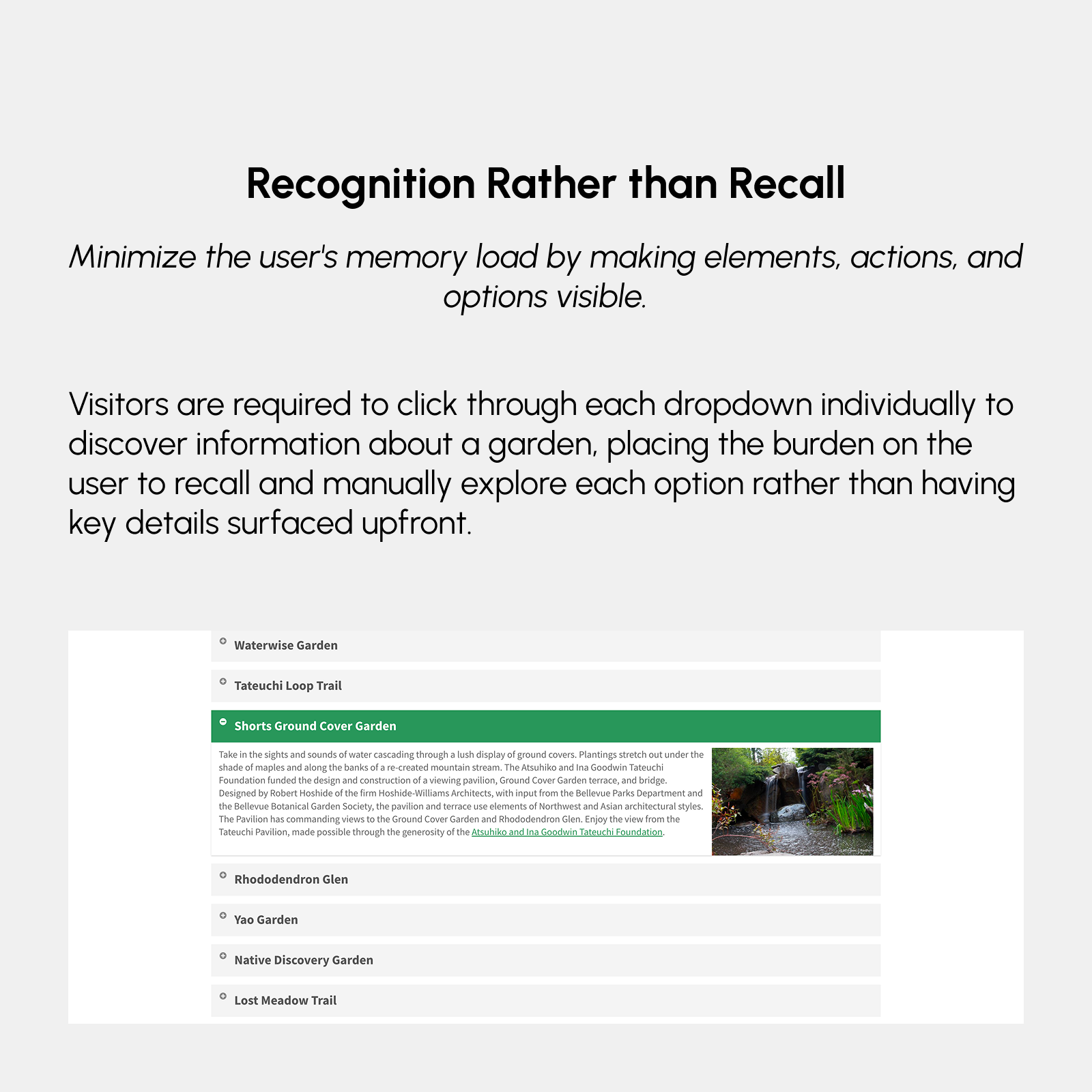
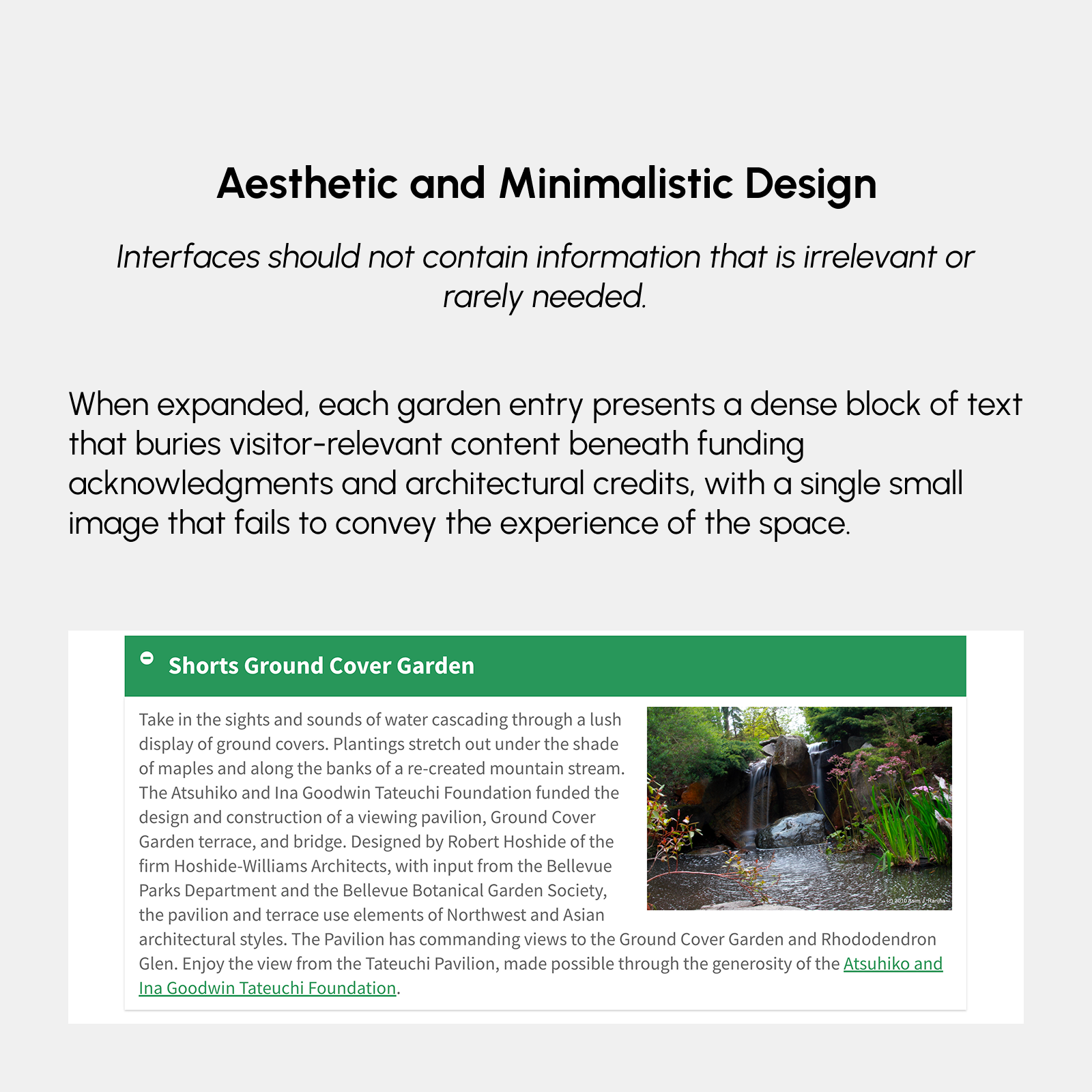
To inform our redesign, we first needed to understand the existing usability issues on the current Gardens page. Using Jakob Nielsen's 10 Usability Heuristics as our evaluation framework, we conducted a heuristic audit of the page.
COmpetitive Analysis
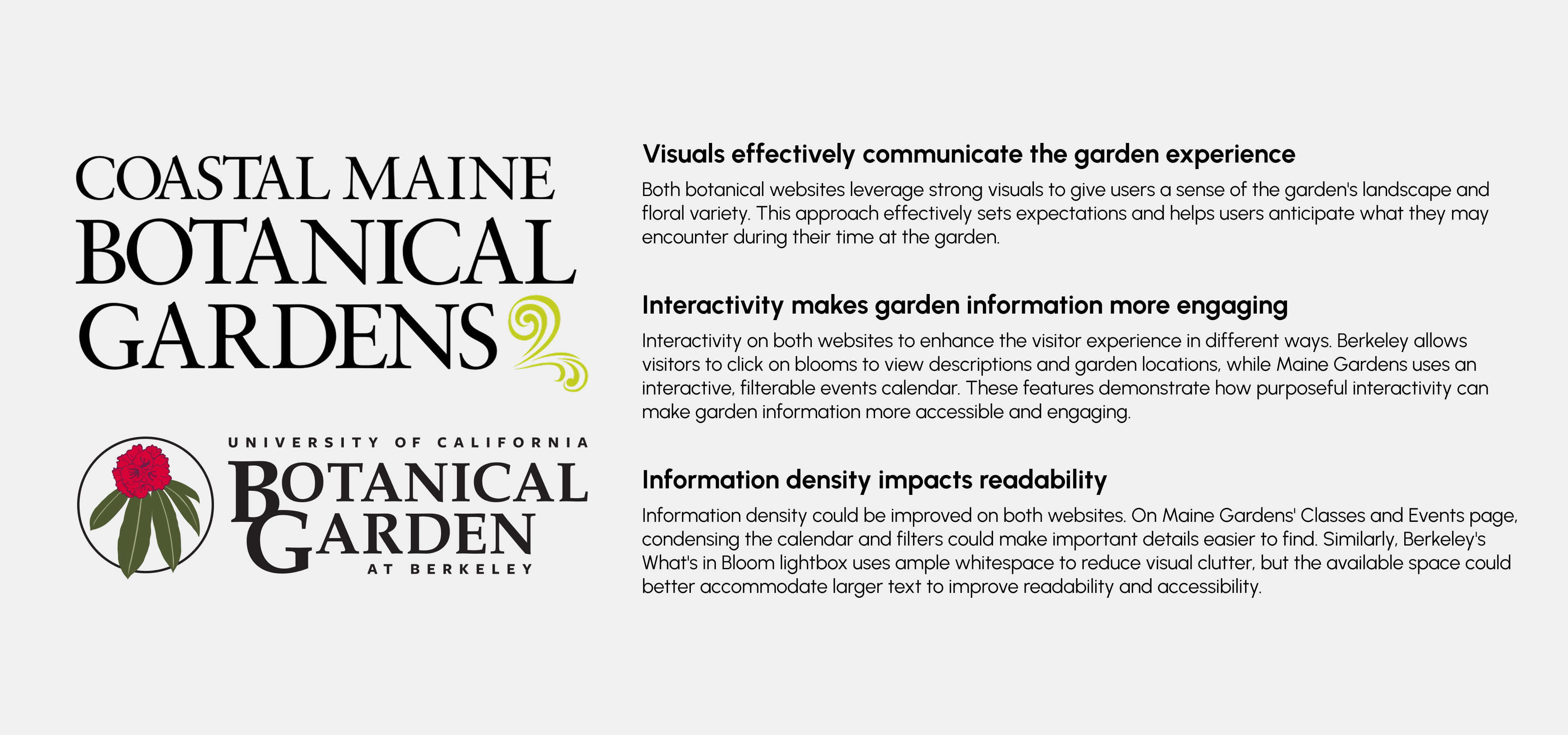
Looking how other botanical gardens portray information
By examining how each site organized content, communicated garden information, and supported visitor planning, we identified effective design patterns and opportunities that informed our redesign decisions.
Survey Report
Hearing the experiences' of garden visitors to understand how they access information
To conclude our research phase, we wanted to hear first-hand experiences on how Bellevue Botanical Garden visitors currently seek out information through the website. We sent out both digital and paper surveys that asked visitors how they approach planning their visit, what they expect to see, and what information is currently excluded from the website.
With over 70 responses, we were able to establish a baseline understanding of visitors' planning behaviors, core pain points regarding the website, information priorities, and any unmet needs.
Design requirements
Principles to guide the redesign of "The Gardens" page
After analyzing all the research we conducted, a clear theme emerged: visitors rely heavily on the Bellevue Botanical Garden website to plan their visit, but they struggle with unclear, disorganized, and text-heavy information. On the current page, visitors struggle to compare gardens and quickly find key information.
These insights translate into a few design requirements to help direct our redesign.
Design Constraints
Recognizing obstacles in our redesign
Before ideation, we worked with the Bellevue Botanical Garden team to identify the key constraints that would shape our redesign. By considering their available resources, technical capabilities, and existing Squarespace website, we ensured our solutions were realistic to implement and maintain.
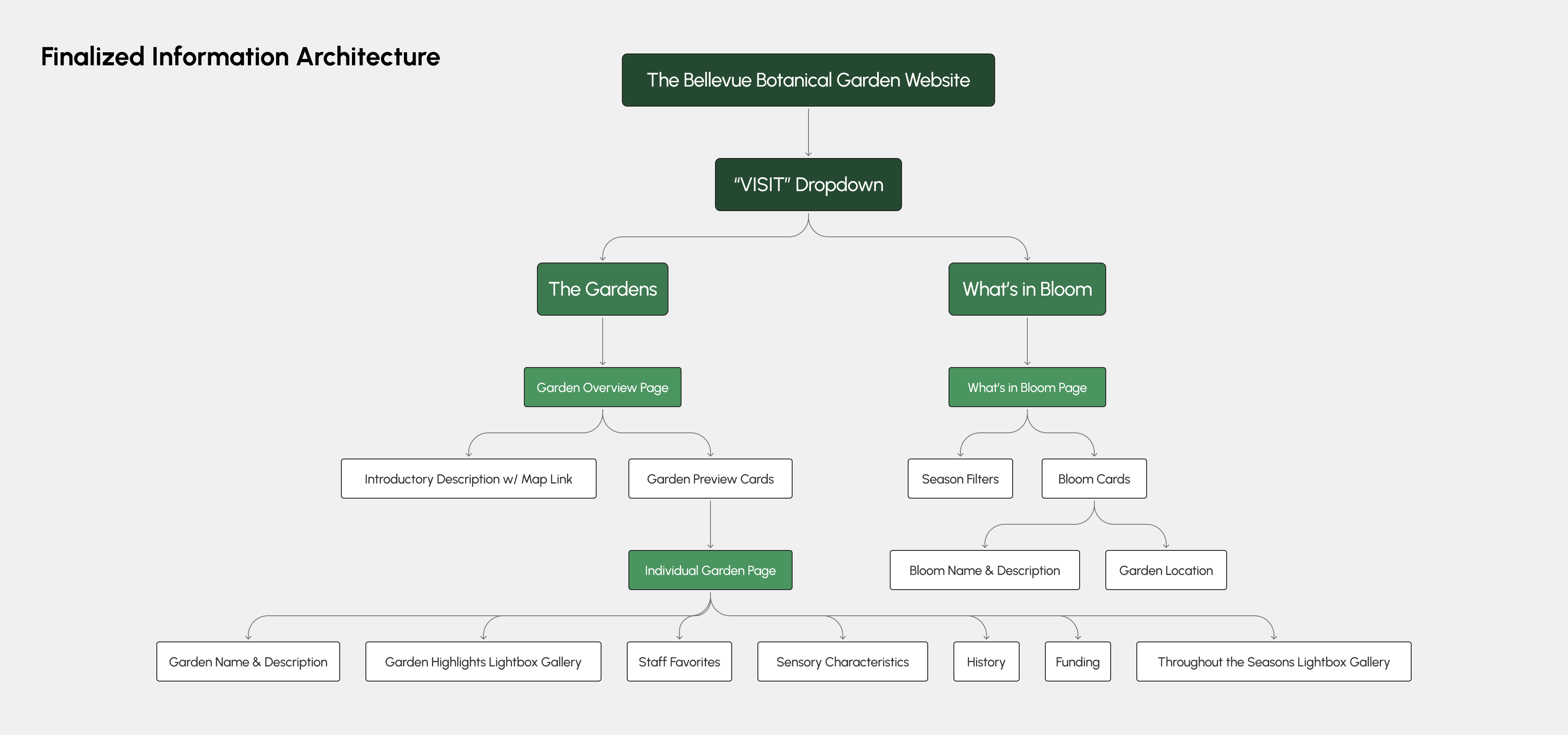
Information architecture
Structuring the information in an organized way
To better support how visitors plan their visit, we restructured the website's information architecture to create a clearer content hierarchy and more intuitive navigation.
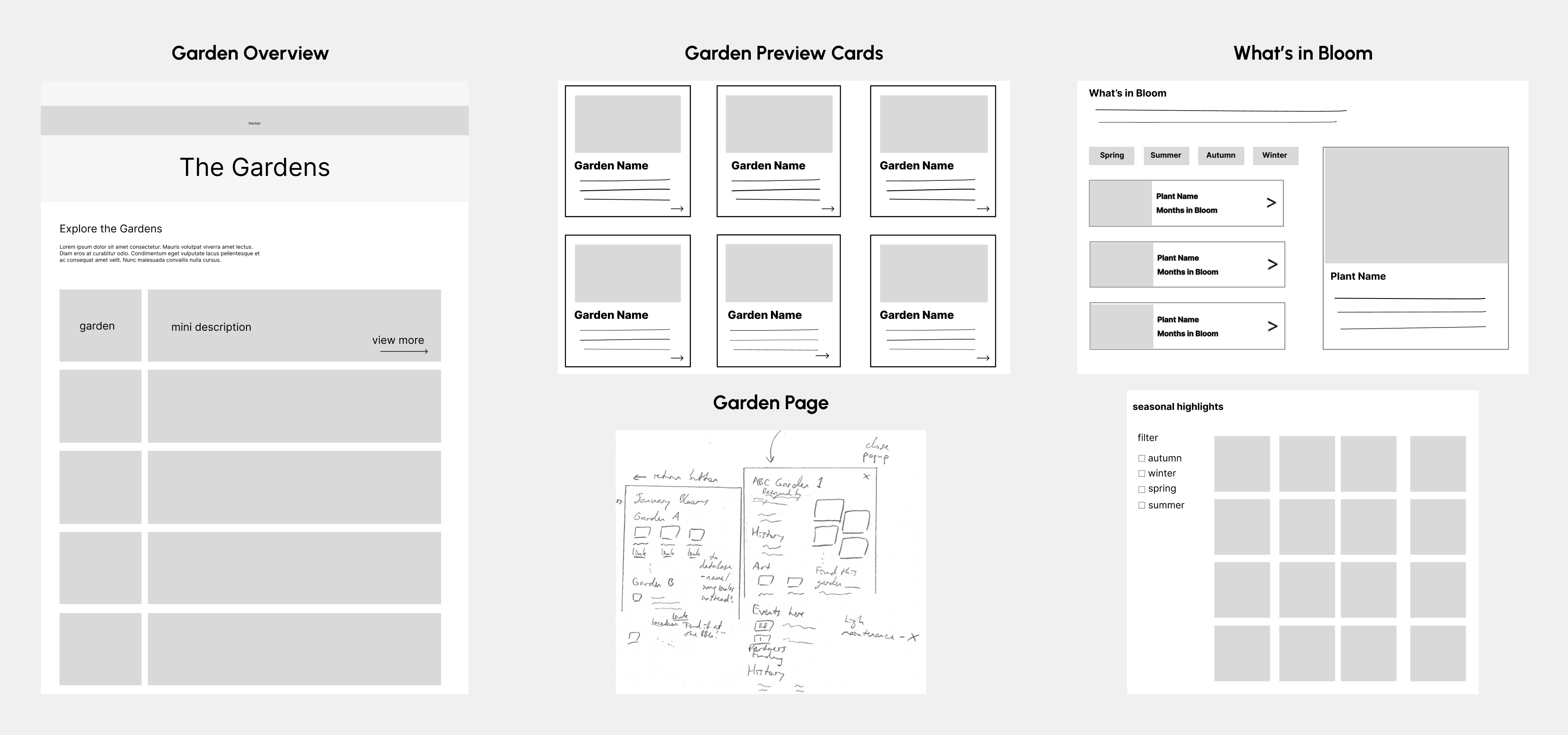
design exploration
Exploring early design directions
We began the design phase by exploring different layout concepts and content arrangements through low-fidelity sketches and wireframing.
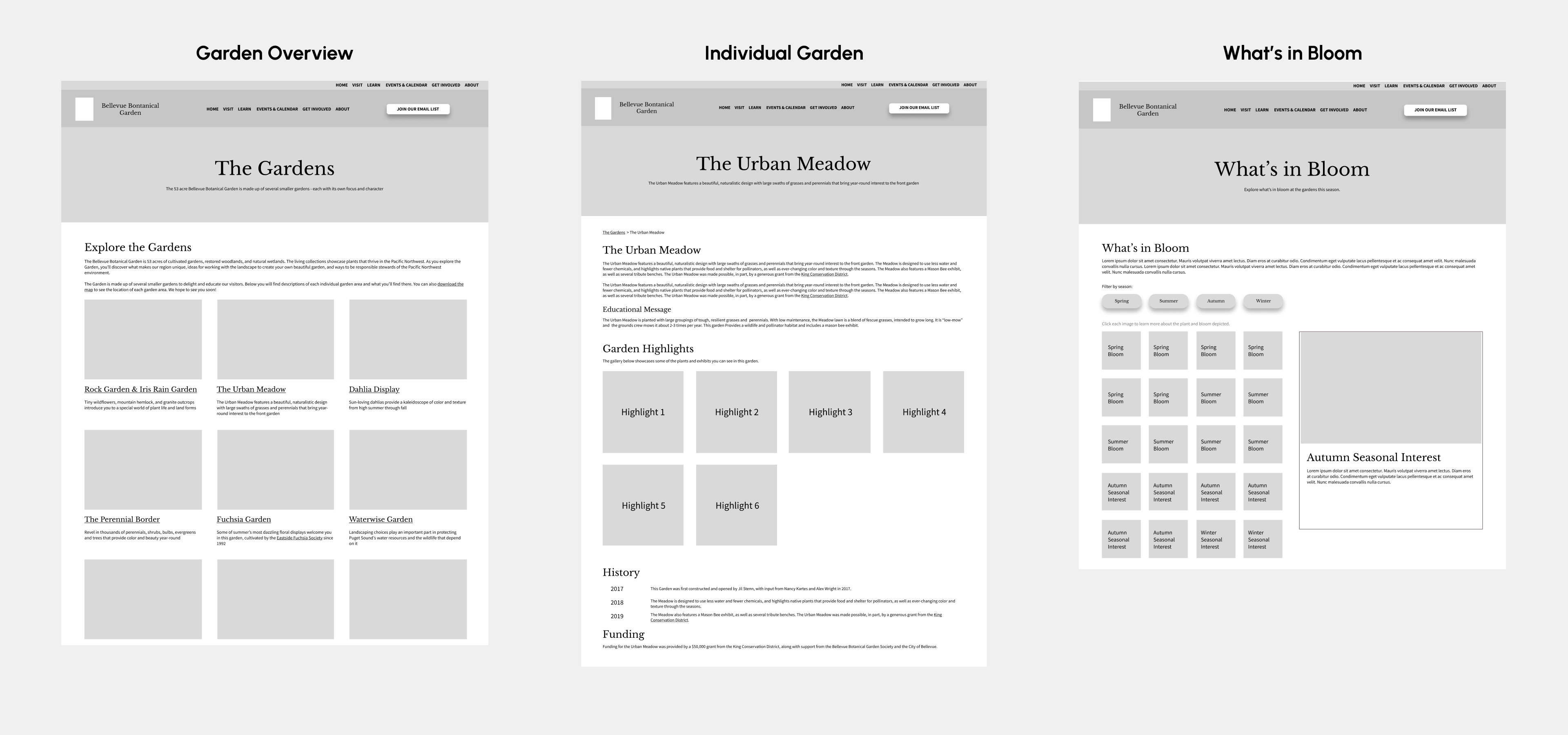
low-fidelity prototyping
Defining page structure and content hierarchy
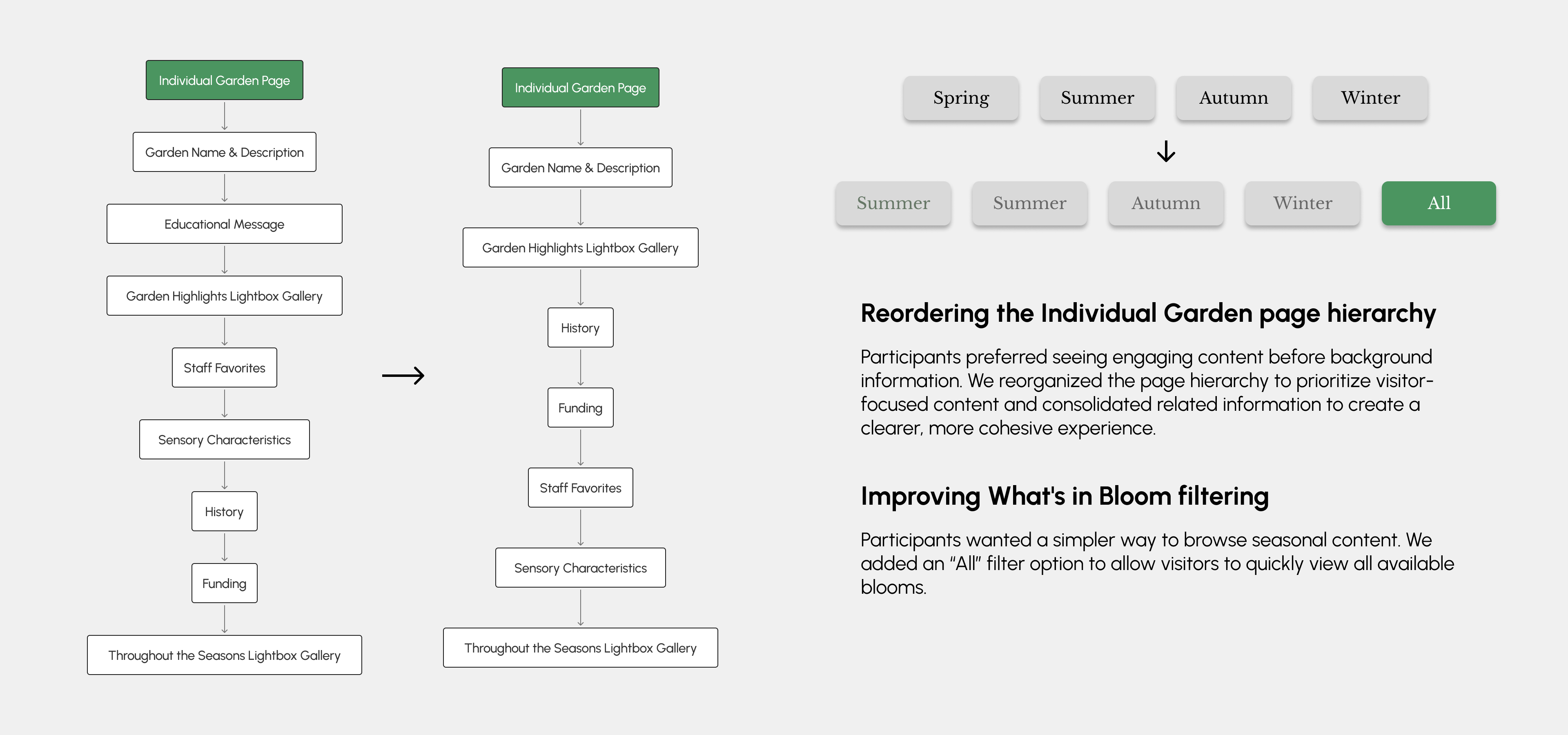
Using insights from our research and early explorations, we created low-fidelity wireframes to establish the structure, content hierarchy, and user flow of the redesigned experience.
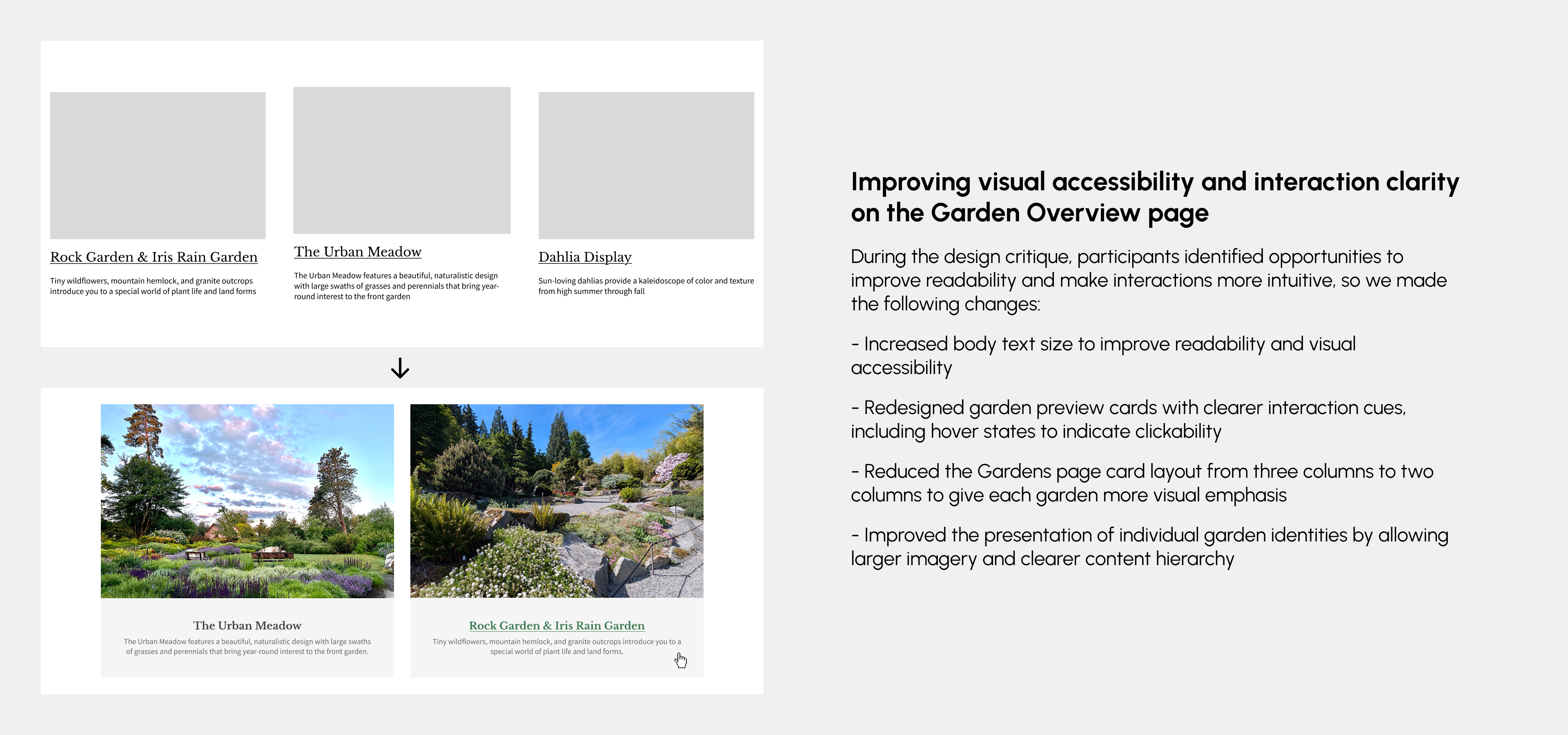
Design Critique
Gathering insights through critique
After developing our low-fidelity prototype, we conducted a design critique to gather feedback on our proposed layouts, content organization, and overall user flow. The insights we gained helped guide our design decisions as we refined the experience.
A redesigned experience that helps visitors plan their garden visit with confidence
Bellevue Botanical Garden Digital Redesign
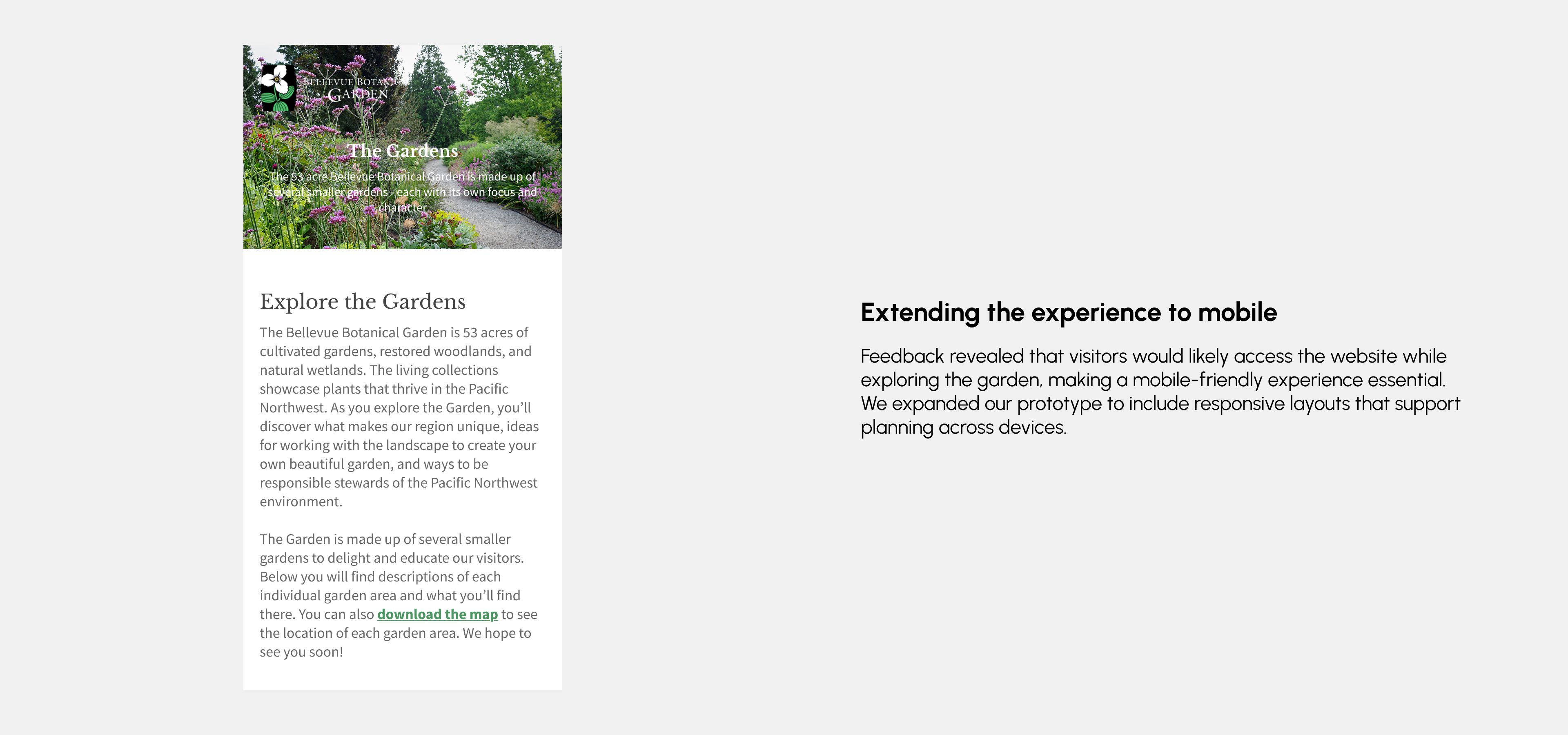
The Gardens Overview Redesign
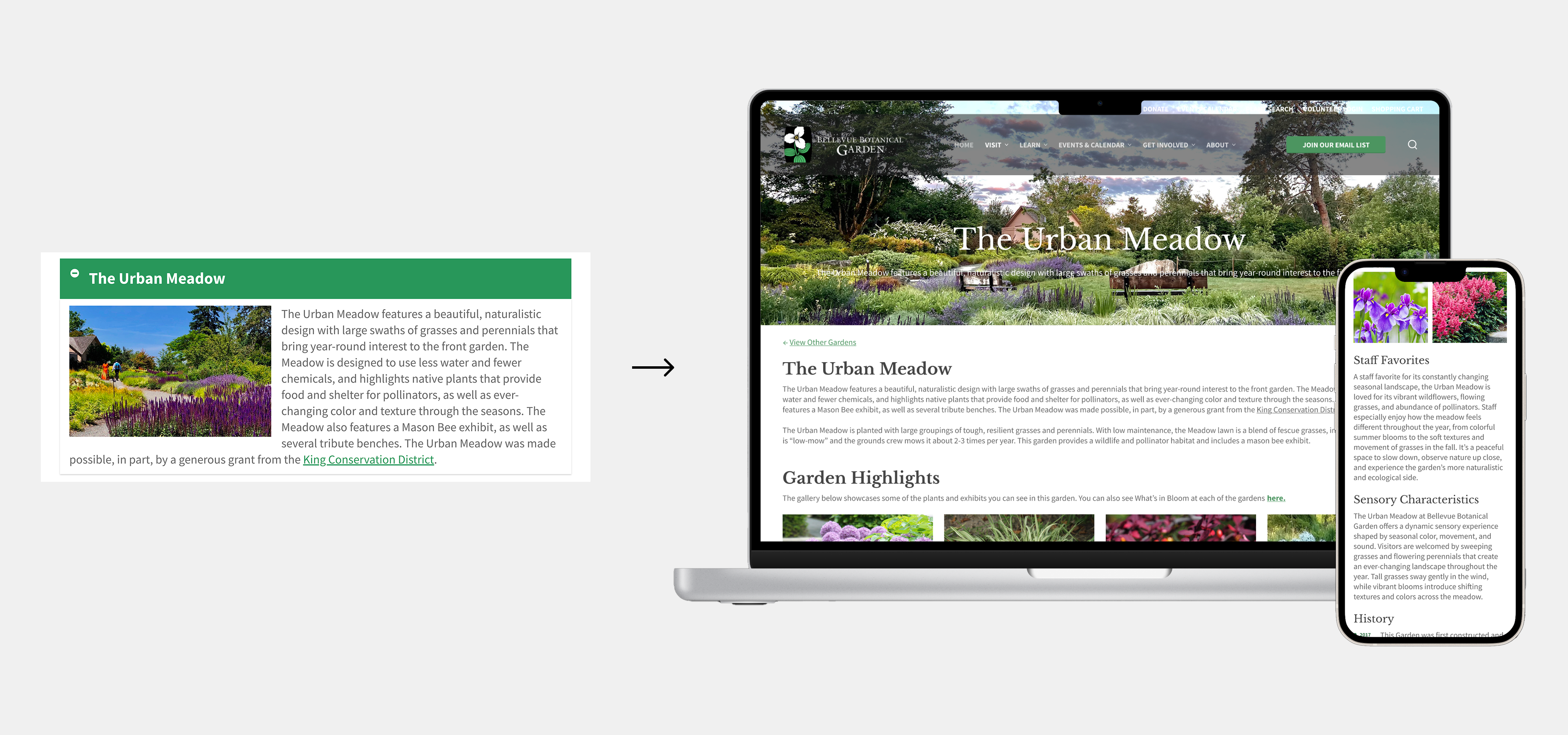
Transformed Individual Garden Page
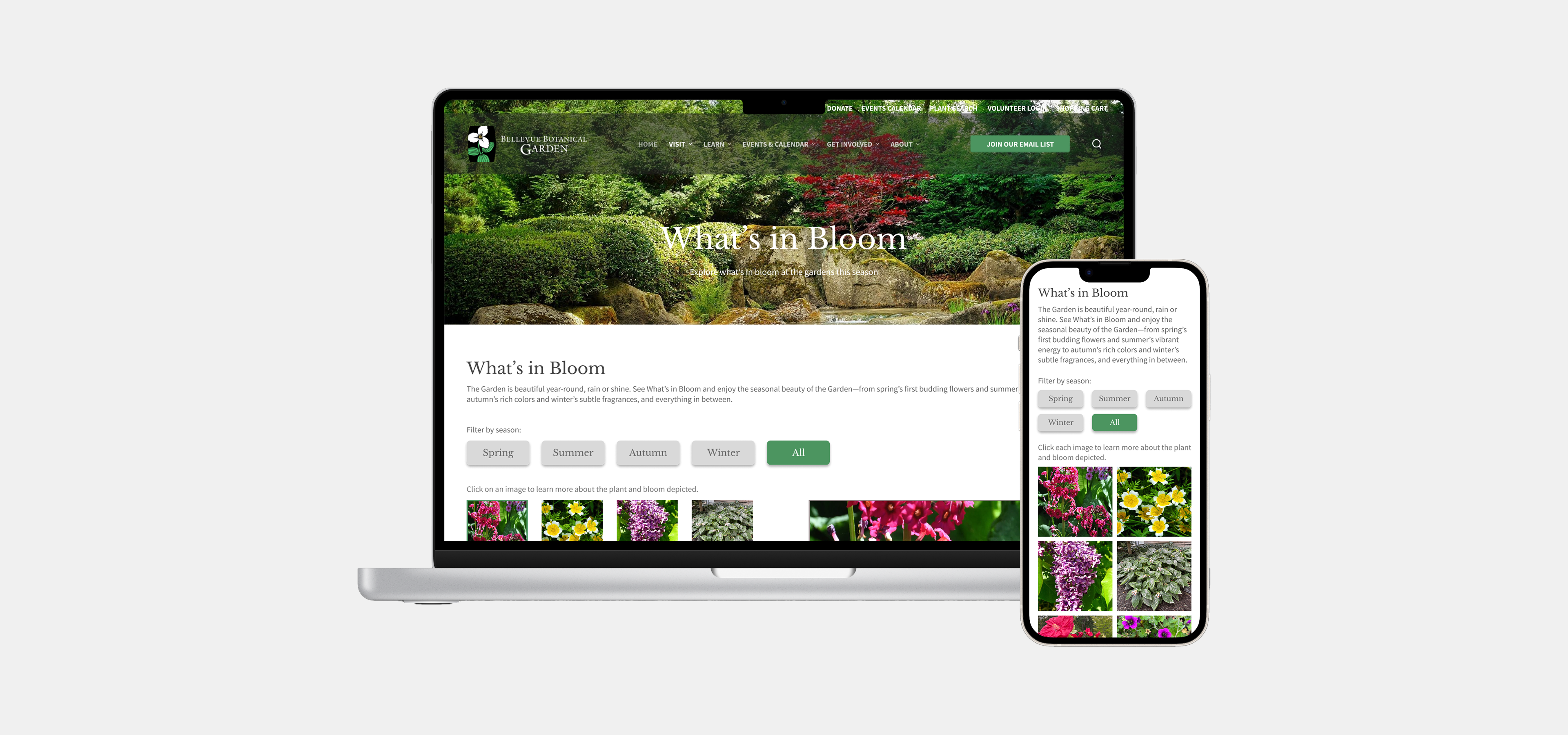
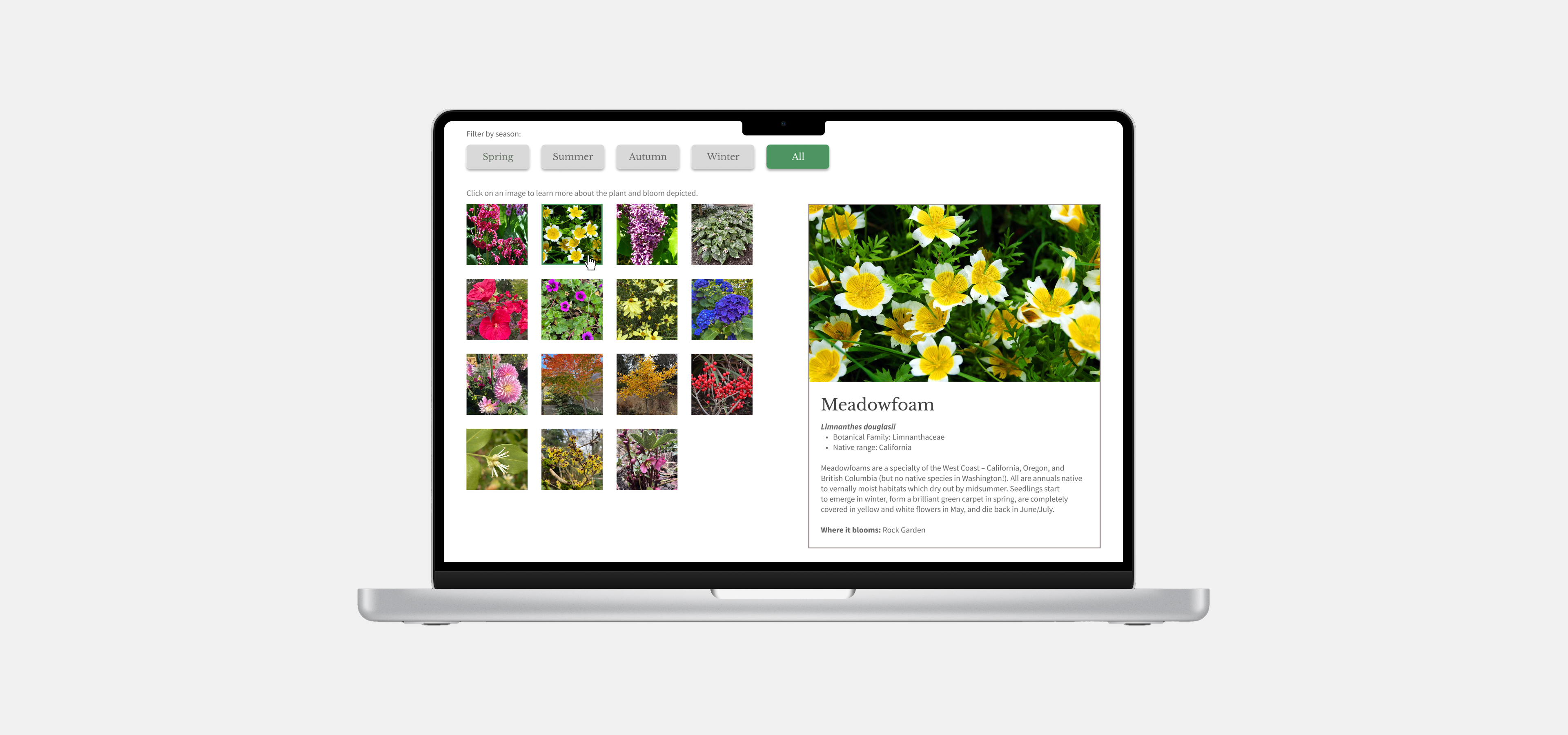
What's in Bloom Page
Bloom Card Interaction
reflection
What I learned from balancing user needs and feasibility
Through this capstone project, I gained hands-on experience applying the full human-centered design process to a real-world problem. Working alongside the Bellevue Botanical Garden team strengthened my ability to translate research insights into design decisions, balance user needs with implementation constraints, and iterate through feedback.
Research-Driven Decision Making Conducting surveys, competitive analysis, and critiques showed me the value of grounding design decisions in user needs rather than assumptions.
Designing with Real-World Constraints Working with an existing design system and a small stakeholder team reinforced the importance of creating solutions that are not only user-centered but also realistic to implement and maintain.
Advocating for Design Decisions Presenting and defending my design choices strengthened my ability to clearly communicate the reasoning behind my decisions. I learned the importance of standing behind ideas supported by research while remaining receptive to feedback and alternative perspectives.
Thank you for exploring this case study. Please reach out if you have any questions or would like to connect.
.png)
.png)
.png)


.png)


.png)